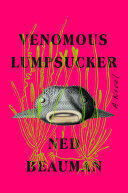
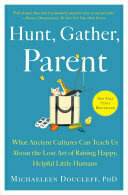
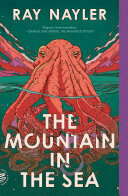
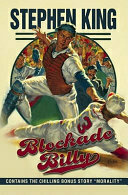
This was a very good book year for me. Probably the best in a decade or so in terms of both quantity and quality. Here are a few themes and highlights.
I got back into reading physical books this year and realized that this is my preferred medium. Of the 15 books that I finished in 2023, three were on my Kindle and the rest were all physical hard copies. I did not listen to any audiobooks this year.
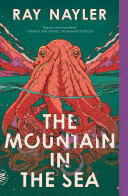
My favorite book I read this year was, without a doubt, The Mountain in the Sea by Ray Nayler. I cannot wait for the follow-up, The Tusks of Extinction, which I’ve already pre-ordered and is scheduled to ship on January 16th. I loved everything about this book.
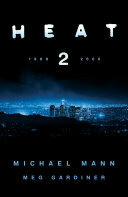
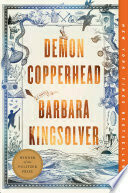
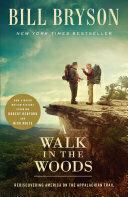
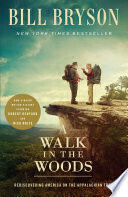
I also read several others that I would give a full five-stars to: Heat 2, Demon Copperhead, A Walk in the Woods, and This Census-Taker.
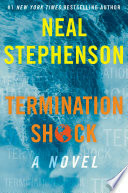
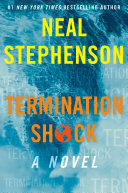
Every book I finished this year was worth the time. One of the changes to my approach that I’d credit with this “good book year” was a new policy to give up on a book more easily than I’ve done in the past without any guilt. Sometimes, a book just doesn’t click for whatever reason and I think that’s OK. This has been a sticking point at times in the past where I’ve tried to keep making it happen and felt like I couldn’t' move on to something else until I’d finished what I’d started and then wound up reading nothing instead of just moving on. Life’s too short and there are way too many books for that. The one exception to this was Neal Stephenson’s Termination Shock, which I did not like but read to the end anyway, even though it was also the longest book I read this year. Even though I didn’t like it, it had some really interesting ideas and at least one or two interesting characters that made it worth the slog.
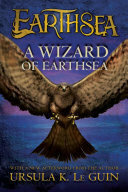
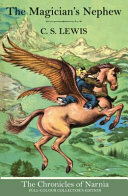
I read the two Narnia books with my six-year-old son. He really loved them and I loved experiencing them with him. I even enjoyed revisiting these books, despite some negative associations stemming from an undergraduate C. S. Lewis survey course. I expect that we’ll continue exploring this series together this year.
Looking forward to reading even more in 2024. Bring on the weird.
One of those books that I just want to climb inside of and live in (despite how unpleasant that would be in the kinds of books that I tend to feel this way about).
Humanity is still afraid the minds we make to do our dirty work for us—our killing, our tearing of minerals from the earth, our raking of the seas for more protein, our smelting of more metal, the collection of our trash, and the fighting of our wars—will rise up against us and take over. That is, humanity calls it fear. But it isn’t fear. It’s guilt (p 266).
Huge thanks to @zioibi for choosing this for the sipped ink summer reading club. I’d had it on the list for a while and this proves to be excellent motivation. It was my first time participating in what I understanding is a long-running annual affair and I am already looking forward to next summer. Loved this book. So much hit so close to home (both figuratively and geographically) and it felt authentic in a way that I didn’t quite expect. I don’t know why, but I had not categorized Kingsolver as an “Appalachian” writer previously, despite knowing of her bonafides in terms of being from Kentucky, but this book is clearly written with a love and intimate knowledge for the region and its people. There’s more going on here, too. The social justice angle. The David Copperfield retelling. The language itself. All of it just got me thinking in all of the best ways, even if those ways are also painful.
For anyone who also loved this book who finds themselves interested in learning more about Appalachia or reading more Appalachian literature, Kingsolver put together a really nice reading list for The New York Times1.
A couple fun, personal notes: Dr. Theresa Lloyd, one of the authors mentioned in Kingsolver’s reading list, was one of my professors years ago and probably did more than anyone else to turn me onto Appalachian Literature as a subject. While studying under Dr. Lloyd, I wrote a paper about the stories of Breece Pancake which remains my one and only academic publication. Thanks for everything, Dr. Lloyd, and congratulations on the big mention in The New York Times! ↩︎
This one felt like it took me about ten years to finish. Pretty good climax and some interesting science to it all, but it was definitely a slog. Was far more interested in one of the storylines (Laks) than the others and those chapters tended to be far shorter throughout most of the book. Also was a bit turned off but what I can only refer to as “dirty old man” humor…
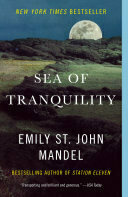
Really enjoyed this. Could see a TV series or a series of short stories or more novellas set in this world. First I’ve read through a full novel by Emily St. John Mandel (though I started and abandoned Station Eleven, and then watched and throughly enjoyed that HBO series). Was completely hooked and intrigued with the first half and must admit that the back half was not what I expected and left me wanting a bit… but was intriguing and kept me turning pages nonetheless.
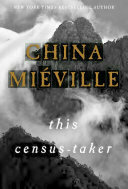
Read this for Defector Reads A Book’s February discussion. First book of fiction that I’ve read in physical form (not audio book) in a long, long time so it feels like something of an accomplishment. I absolutely loved this book. First I’ve read by Miéville and now I can’t wait to dig deeper into his catalog.
If you’ve ever been seventeen, and especially if you’ve ever been seventeen in a small town, you’ve had your own year of dark nights. But when your are seventeen, and especially when you are seventeen in a small town, you believe there is opening before you a mysterious and uncharted realm that exists for you alone. You and your friends are conspirators in a shadow country.
From “In the Dark: Science Fiction in Small Towns"
If you’ve ever been seventeen, and especially if you’ve ever been seventeen in a small town, you’ve had your own year of dark nights. But when your are seventeen, and especially when you are seventeen in a small town, you believe there is opening before you a mysterious and uncharted realm that exists for you alone. You and your friends are conspirators in a shadow country.
From “In the Dark: Science Fiction in Small Towns" in the wonderful Impossible Owls collection by Brian Phillips.