🔗 John Saward for The Small Bow, republished at Defector | James Gandolfini Had A Lot In His Bag
He was always referring to himself as a “guy like me,” in a baffled sort of way, like how the fuck did a guy like me pull this whole thing off?
🔗 John Saward for The Small Bow, republished at Defector | James Gandolfini Had A Lot In His Bag
He was always referring to himself as a “guy like me,” in a baffled sort of way, like how the fuck did a guy like me pull this whole thing off?
🔗 Giri Nathan for Defector | Russell Westbrook Was Total
A little like Vonnegut’s ice-nine, once he touches the ball, the whole floor becomes instantly Westbrookized.
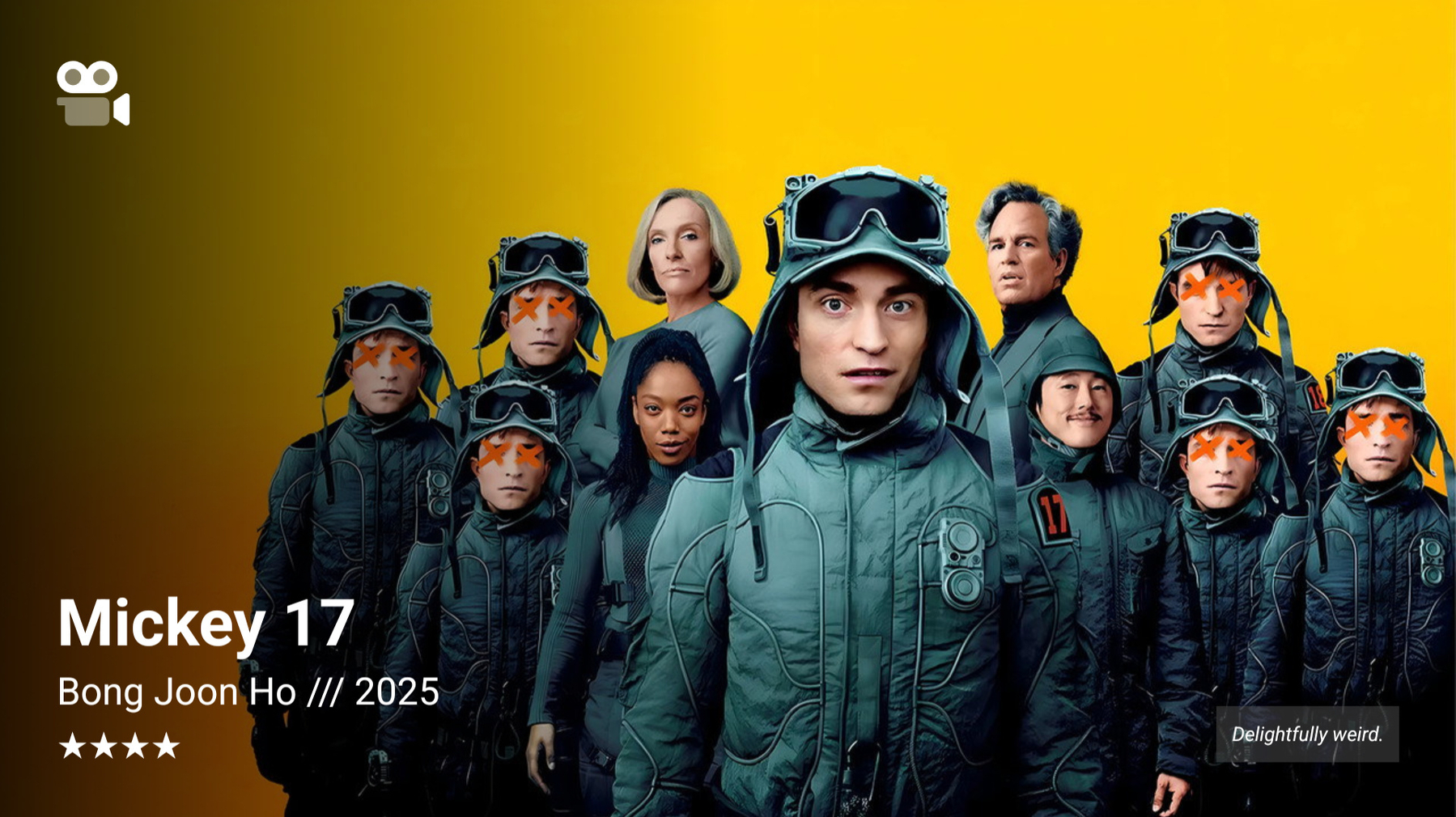
Watched: Mickey 17 🍿
🔗 TC Sottek for The Verge | “Our favorite memories at the movies”
This is such a fun piece. For me, like Ursa Wright, my favorite movie-going experience revolves around The Lord of the Rings franchise. A group of friends who had read the books waited in line for a midnight showing on opening night—several of whom in costume (not me, sadly)—in a completely packed, sold out theatre, for The Fellowship of the Ring. It’s hard to explain the anticipation we (and I thing many, many others) held for this first in the franchise adaptation. This was 2001 and I think I’d first read the books, which was a relatively life-changing experience for me, in probably 1997-1998 so everything was still fresh in my mind. There was a lot of skepticism about the whole endeavor of Peter Jackson to bring these beloved books to life. It’s always a challenge to adapt book to film and the people who loved these books really loved them, but I’ll never forget how amazed I was at how perfectly the film seemed to capture exactly the world and characters that I’d had in my head from the books, and being in a packed theater alongside close friends who were cheering, laughing, screaming in unison along with the events of the movie made it all so much more enjoyable.
There’s nothing quite like the communal experience of a packed house for a great movie.
📚 Killer new short story by A.L. Goldfuss (available for DRM-free purchase!) published at Reactor | Not Like Other Girls
“What’s your name?” Paul asks as I stare at the skin boot and stalk.
I press the fleshy lips together. “Kelp.”
Shit yeah.
Watched: Finch 🍿
🔗 | Contagious Cancer Found in North American Catfish — Javier Carbajal at Wired
An international team of researchers has identified a transmissible melanoma in the brown catfish (Ameiurus nebulosus)—the first documented case in fish and also the first recorded in a freshwater ecosystem.
This seems… uh… bad.
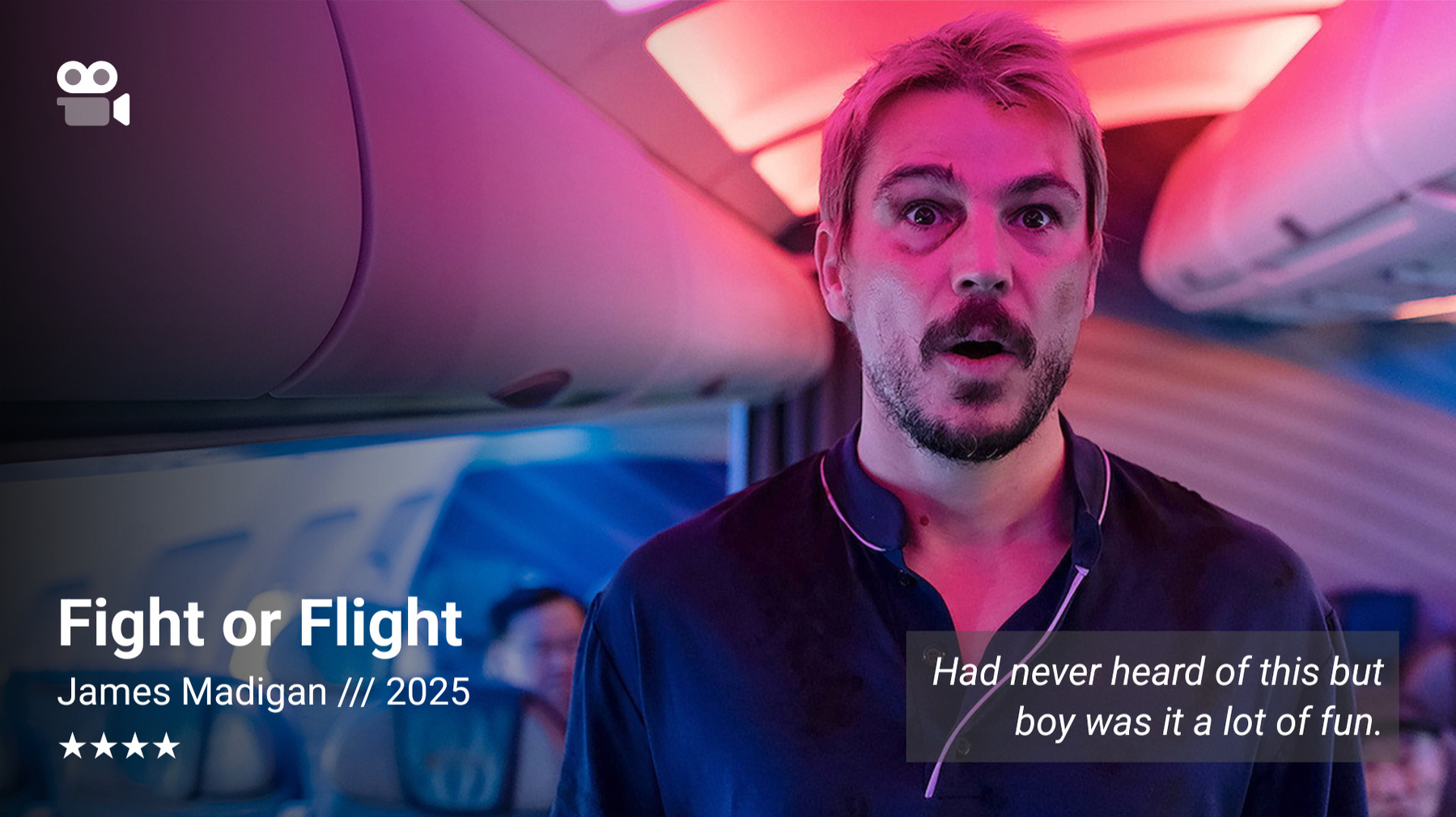
Watched: Fight or Flight 🍿

Finished reading: Palaces of the Crow by Ray Nayler 📚
Finished reading: Infinite Baseball by Alva Noë 📚
Finished reading: Perdido Street Station by China Miéville 📚
What an absolute disaster.
June 17, 2026 by Heather Cox Richardson
It looks as if Trump’s war on Iran has cost the U.S. the lives of thirteen service members, injuries to 400 more, and at least $132 billion so far in immediate costs, lost income, and higher consumer costs, only to leave the U.S. in a significantly worse place with regard to Iran than before Trump started bombing.
The costs to the world have been significantly higher in terms both of lives—beginning with more than 175 Iranian schoolchildren and their teachers—and of economies.
At Defector, David Roth makes a really interesting observation about the tragedy of retired athletes like Jordan, Woods, and others who struggle to find an appropriate receptacle for all the effort that was formerly poured into becoming and remaining (or at least striving to be) the greatest-of-all-time.
What pathos there is to find here lies in the fact that while the men in these stories do things traditionally associated with masculine leisure—upscale gun shit, committed campaigns of adultery that play out as a series of escalating heat checks, gambling, sports-adjacent drinking in all-male groups, the catechistic going-over of old slights and beefs, compulsive golfing—they are categorically incapable of doing it in a leisurely way.
Roth goes on to make some broader points about society at large and about Tom Brady’s interesting retirement lifestyle choices, but what I found most interesting was how effectively he highlights a sort of incompetence in these paragons of competence. What made them so great also makes, it seems, for a rather depressing denouement.
These men don’t have to work, but they forgot how to do anything else, and long ago lost any other way to treat every day but as another thing to be defeated.
I’m sure that none of these examples would trade their greatness for an easier transition into retirement and more aptitude for the life of leisure, but I’m also sure that, at this point, they are beyond recognizing that as a choice that could have been made. Once the wiring is in place that says “this is a thing to be defeated” about basically anything at which one can improve over time, it’s almost impossible to remove the switch that completes the circuit. As a competitive person and former athlete—even at the extremely low comparative heights at which I competed—I recognize this misinterpretation of leisure as conquest.
My own transition from competitive athlete who spent every waking (and, honestly, sleeping) hour thinking of and taking steps to improve at a very specific thing to a human who exists in the world and and does many things, mostly not including that one thing at any meaningful scale also required some self destruction. Even now, after that self destruction and decades after this competitive switch was made vestigial, I feel its current in the strangest of places. A comparative literature class, an ax throwing event with coworkers, a particularly challenging level in Super Mario Bros. Wonder, all present opportunities to turn leisure into the work of winning. I imagine that the scale of this particular sort of sickness correlates to the scale of former success.
Now, as a parent, I want to be mindful of these things and these choices and building the kinds of connections that create these conditions. Yes, it is fun to win. The pursuit of excellence in any field is a worthy goal. But it is also necessary to be able to have fun in a way that is separate from competition. To enjoy the act itself rather than the validation inherent in winning.
I hope to be able to help my kids find that balance.
📺 Y’all were right: this Widow’s Bay show is really fun.
The kids are alright, part 2 . . .
“I definitely thing there’s a catharsis in it, especially at a time where it feels like there are never any consequences for rich people, ever,” said Oliver about the much-talked-about viral videos1. “I think it’s possible to take this outrage and channel it toward something impactful, but it doesn’t just spring up. People have to get together and say ‘let’s do something.’”.
The article is about the college graduate response to AI-focused commencement speakers around the country. ↩︎
The in-game NBA broadcasts on NBC are head and shoulders above either of the other networks these playoffs.

Finished reading: The Hungry Gods by Adrian Tchaikovsky 📚
🍿 One Battle After Another, (finally).

Finished reading: Where the Axe Is Buried by Ray Nayler 📚
Jarrell Miller Got His Hair Punched Off And Became A Hero by Dave McKenna
Laughed super hard at this article and included YouTube link.
. . . Miller stood up during the break and faced the crowd and with a massive smile ripped off the semi-detached rug off his head. He tossed it to the crowd the way end-stage Elvis Presley would a sweaty towel. All that was left on his dome was a black oval outline where the failed adhesive had been applied. Miller’s move filled the room with ecstasy.